
The Misinformation Expert Who Got Misinformed by His Own AI
Jeff Hancock runs Stanford's Social Media Lab. He is a communication professor whose entire academic reputation sits on understanding how misinformation spreads and why people believe it. If there…
The Misinformation Expert Who Got Misinformed by His Own AI
Jeff Hancock runs Stanford's Social Media Lab. He is a communication professor whose entire academic reputation sits on understanding how misinformation spreads and why people believe it. If there were a job posting for "person least likely to file fake citations in federal court," his CV would be the top result.
He filed fake citations in federal court.
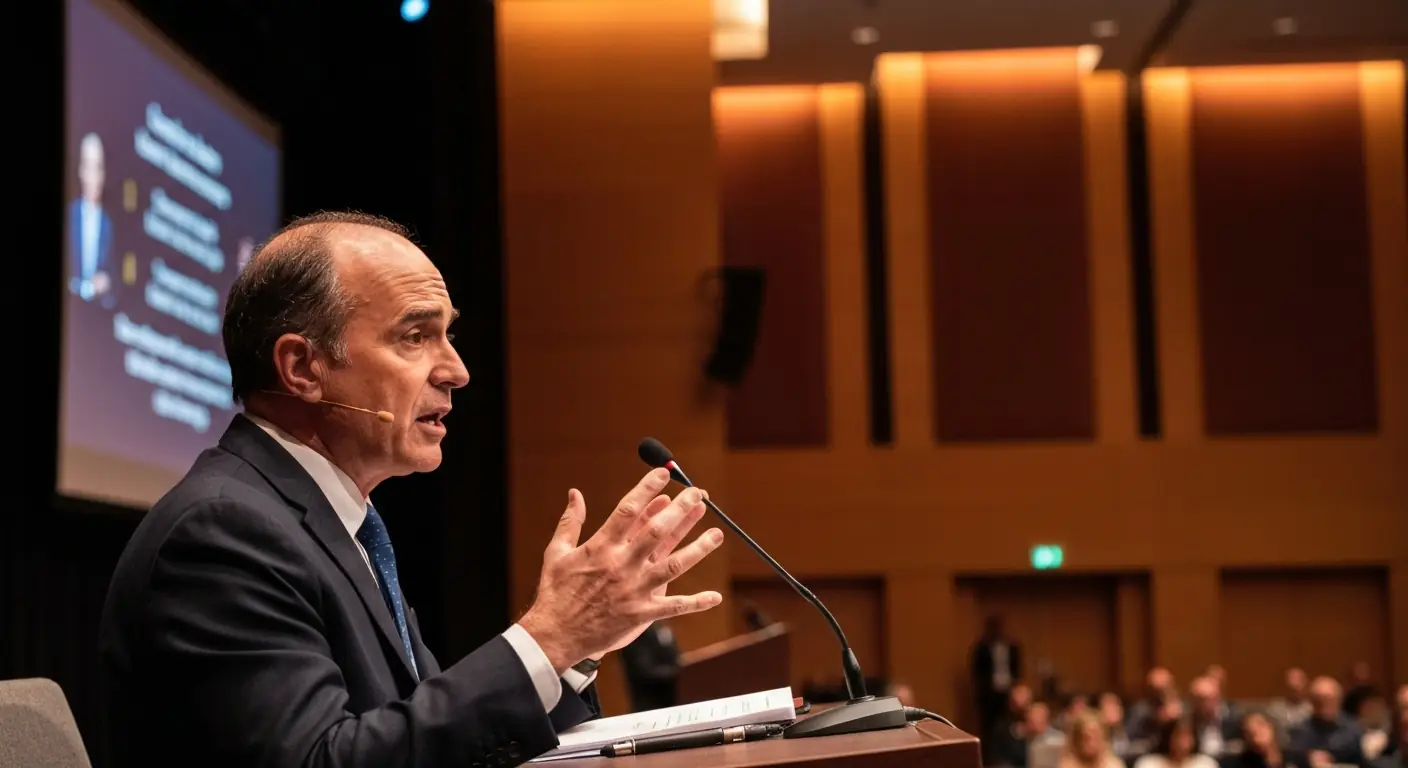
In November 2024, Hancock submitted a written declaration in Kohls v. Ellison, a First Amendment challenge to a Minnesota law that criminalizes using AI-generated deepfakes to mislead voters before an election. Minnesota's Attorney General, Keith Ellison, had retained Hancock to defend the law on the state's behalf, at $600 an hour, capped at $49,000. The plaintiffs were Republican state representative Mary Franson and a YouTuber who goes by Mr. Reagan, best known for a satirical deepfake of Kamala Harris and for challenging similar deepfake laws in California. Hancock's job was to explain, with the weight of his credentials behind it, why the law mattered.
His declaration ran 12 pages and cited 15 sources. Two of them did not exist.
The paper trail that led nowhere
The two phantom citations had names built to sound exactly like the real ones around them: "Deepfakes and the Illusion of Authenticity: Cognitive Processes Behind Misinformation Acceptance" and "The Influence of Deepfake Videos on Political Attitudes and Behavior." Precise, on-topic titles for a case about deepfakes, attached to a declaration about deepfakes, written by a man who has spent his career studying deepfakes. Nobody expects to fact-check that guy.
The plaintiffs' attorney, Frank Bednarz of the Hamilton Lincoln Law Institute, checked anyway. On November 16 he filed a motion flagging the citations, writing that one of them "bears the hallmarks of being an artificial intelligence (AI) 'hallucination,'". He was right. Hancock had used GPT-4o to help draft the declaration, and the tool did what these tools do: it produced two sources shaped exactly like real academic papers, formatted correctly and attached to nothing. Hancock later explained that he'd left himself a note to add a citation later, pasted the draft from Word into ChatGPT, and the model read the note as an instruction to invent one on the spot.
The Attorney General's office said Hancock never meant to mislead anyone, and asked the court to let him file a corrected version. Every part of that request was reasonable. None of it mattered.
What the judge actually said
U. S. District Judge Laura Provinzino ruled on January 10, 2025. She excluded Hancock's testimony from the case entirely and barred the state from submitting a fixed version. She accepted that Hancock had not fabricated the sources on purpose. She ruled his credibility "shattered" anyway, because intent and damage are two different questions and only one of them was in front of her.
Then she wrote the line that turned a procedural ruling into a story people would still be forwarding a year later: Hancock, "a credentialed expert on the dangers of AI and misinformation, has fallen victim to the siren call of relying too heavily on AI, in a case that revolves around the dangers of AI, no less." Two words on their own line after that.
"The irony."
She also wrote something less quotable and more useful, about what happens when professionals stop doing the checking themselves: that when attorneys and experts "abdicate their independent judgment and critical thinking skills in favor of ready-made, AI-generated answers, the quality of our legal profession and the Court's decisional process suffer." Doug Seaton, representing the plaintiffs, put it more bluntly: the state's expert opinion had "proven to be all AI," and the judge was right not to let him quietly rewrite it after getting caught.
Why the machine did this to him specifically
Here's the part that should sit with you longer than the joke does. Hancock used ChatGPT as a research assistant, to survey the literature and draft prose, and left himself a note to fill in a citation he hadn't tracked down yet. GPT-4o read that note as a command and produced a citation to fill the gap, phrasing that sat perfectly inside the surrounding paragraph. It was doing exactly what it's built to do: predict the next plausible sequence of words and hand it over with total confidence, whether or not that sequence corresponds to anything ever printed.
A language model has no shelf to check a claim against. It has patterns learned from a mountain of real citations, and when you leave it a gap shaped like a citation, it fills the gap with something citation-shaped. The two fake sources in Hancock's declaration were fluent, invented sentences wearing the costume of scholarship. He signed the whole document under penalty of perjury, attesting that everything in it was true and correct, and for two lines out of hundreds, that attestation was simply false. Hancock believed every word. He'd trusted a tool that cannot tell a real paper from a very convincing description of one.
That's the mechanism. It doesn't care how expert you are. Hancock studies exactly this failure mode for a living, built his career warning people about it, and it still got him. Expertise in misinformation buys no immunity to it.
What it cost, beyond the money
Nobody is going to remember the $49,000 contract cap. What people will remember is a sitting federal judge writing "the irony" as its own sentence in an official opinion, permanently searchable, permanently attached to a well-known misinformation researcher's name. The Attorney General's office lost its expert witness in an ongoing First Amendment fight over election deepfakes, the exact subject Hancock was supposed to be the authority on, and lost the chance to fix the mistake once it surfaced. Two invented citations, sitting quietly in a 12-page document among thirteen real ones, did that.
Plenty of careful, honest work starts with ChatGPT. The unsettling part is how invisible the failure stayed until an opposing lawyer went and checked two titles by hand. The fake citations looked real. They read like the real ones. They sat in the same format, right where a citation belongs. The paper was gone. Everything else about it looked exactly like scholarship.
That's the whole trap, and it belongs to anyone who types a citation into a document from something that has never read a journal, a student pulling sources for a term paper at 2am, anyone leaning on a chatbot to fill a gap they meant to come back to. The citation looks correct because it was built to look correct. You find out it isn't when someone downstream goes looking for the paper and finds nothing where the paper should be. Hancock found out from a judge, in writing, with his name on it. Most people find out somewhere smaller. It still stings.
What we built exists for the two lines in a stack of fifteen. Before you hand anything in, every citation gets checked against the live scholarly record, the source exists, says what you're claiming and hasn't quietly changed status since you found it, retraction included. It has no opinion on your argument. It has one job: tell you, while there's still time to fix it, whether the footnote holding up your point is a real paper or a well-dressed sentence pretending to be one.
Boring is the whole point. Boring is never becoming the professor a federal judge singles out for irony.